Scaffolding isn’t cheap, especially for flats and high-rise buildings.
Yet it is often required when you’d like to replace the windows several floors up. There are plenty of risks involved, from health and safety concerns to arranging it to be taken down.
But what if you could install brand-new windows without the use of scaffolding? We explore the options below, explaining an alternative route to window installation which could save you time, money, logistical hassle and more.
The Problems Of Scaffolding For Installing Windows
Just because scaffolding is often used, does not mean it’s the best option available. In fact, there are numerous problems with it when it comes to installing windows in London flats. Here’s a summary of the common issues we encounter:
High Costs
- High setup costs: Scaffolding is expensive to erect and dismantle. For smaller projects or installations involving just a few windows, the cost of scaffolding can be disproportionately high compared to alternative methods like rope access, cherry pickers or our own method of installing windows from the inside.
- Ongoing rental costs: The cost of renting scaffolding can accumulate quickly. In contrast, scaffold-free methods usually incur fewer ongoing costs since they don’t require fixed structures to be maintained throughout the project.
Hassle of Setting Up
- Building & dismantling: scaffolding setup can take several days for larger, high-rise buildings. This can (and does) delay the window installation process.
- Potential Disruption: Scaffolding can often block windows, balconies, and various access points. Equally, there is the noise, dust and eventual appearance of the scaffolding. This problem is exacerbated by sheeting laid over the framework of the scaffolding.
- Weather disruption: It’s not uncommon for driving rain, heavy snow or windy conditions to disrupt scaffolding use and construction. This can even become a health and safety concern for the apartment residents and for the workers themselves.

Limited Flexibility
- Space: This is a huge concern for many London clients. Scaffolding needs space – both for the structure itself and for it’s installation. Not all London flats have this.
- Static structure: Once scaffolding is erected, it’s fixed in place and covers large sections of the building. This makes it less flexible for when you’d only like to replace a handful of windows.
- Adaptability: If the scope of the work changes, the scaffolding might have to change also. For example, it may need to be expanded to other areas of the building or need to be modified. These kinds of alterations will raise the cost of the project further.
Security Concerns
- Allowing unwanted access: Scaffolding can create security issues by providing an easy way for intruders to access windows, balconies, or upper floors. It also creates more access to private areas. And additionally, you have an increased amount of access to private areas.
Why is Scaffolding Often Used for High-rise Window Installation?
Do you need scaffolding to replace windows? For a long time, people have assumed that scaffolding is necessary if you’re going to replace windows on (e.g.) the 10th floor – despite the ongoing inconveniences.
Here’s why people still opt for this solution:
- Creates a stable working area: Scaffolding provides a stable, full-length platform that allows workers to access multiple windows on a single level or across different floors. So, it’s considered particularly useful when replacing or installing many windows at once.
- Useful for large & heavy windows: Some window systems can be large or heavy, requiring more secure, flat surfaces for safe handling. Workers tended to use a platform to safely manoeuvre and install these windows without the need for constant balancing or restricted movement.
- For health and safety: Scaffolding for window replacement usually adds a layer of safety, with the inclusion of guardrails and a stable surface to work on as part of government guidelines. It also acts as a space to place tools – and a barrier between the ground – reducing the chance of dropping items onto the streets below.
- Aids precision work: Window installation requires precision, especially with aligning the frame, sealing, and ensuring proper insulation – and scaffolding allows the workers to take their time when performing these tasks.
- Useful for long projects: For large-scale projects, scaffolding allows workers to remain on-site without constantly setting up and moving equipment. This sometimes makes scaffolding the efficient option when replacing windows on several floors (or over a longer period).
- It might be necessary – some buildings require scaffolding to be used. This could be due to the health and safety conditions, complexity of the replacement, duration of the job – or a number of other reasons. However, most of the time scaffolding is not an absolute requirement.
Alternatives to Scaffolding When Fitting New Windows
So if you want to replace windows without scaffolding – what are your options? Unfortunately, many of the current alternatives require special equipment or operation, meaning they’re also costly and difficult to conduct safely.
Here are just some of the alternative ways to fit windows in apartment blocks:
- Rope access (Abseiling) – Rope access, also known as abseiling, involves workers using harnesses and ropes to descend the side of a building, accessing windows directly from the exterior.
- Mobile Elevated Work Platforms (MEWPs) – MEWPs, such as cherry pickers or boom lifts, are mobile platforms that can be raised and lowered to reach different heights. These machines provide a stable platform for workers to install windows, depending upon the heights they need to reach.
- Suspended cradles (gondolas) – Suspended cradles or gondolas are platforms that are suspended from the top of the building, and can be raised or lowered along the facade to allow access to the windows, and aid installation.
- Building Maintenance Units (BMUs) – Some high-rise buildings are even equipped with permanent Building Maintenance Units (BMUs). These are motorised platforms designed for tasks like window cleaning and maintenance, and can sometimes be adapted for window replacement.
- Telescopic handlers with window suckers – Telescopic handlers with specialised window suction systems can lift and position glass windows from the ground up to high levels. The handler uses suction cups to hold the window in place while it is installed.
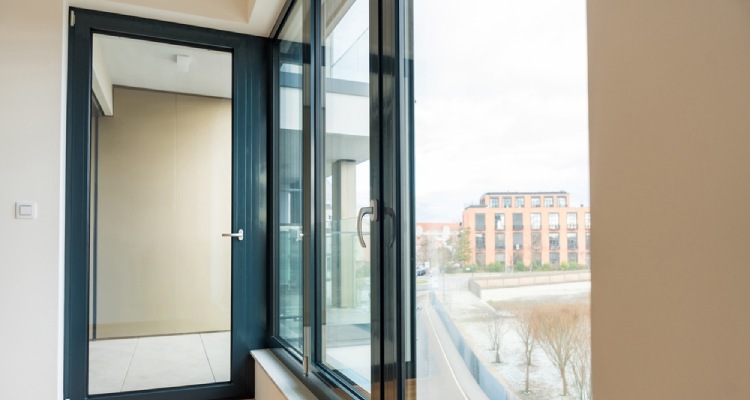
- Interior Removal & installation (Using Tilt-and-Turn Windows) – In some cases, windows can be installed from the inside of the building. This method is more common with tilt-and-turn windows that are designed to open inward, allowing for easier installation or replacement from within the flat – though many older apartments and flats do not have windows that allow for this.
Best Scaffolding Alternative for High-rise Window Installation
While there are alternatives to traditional scaffolding for window replacement, none of the above are particularly cost-effective either. Or, they only work in certain circumstances when it is possible to operate them safely.
Thankfully, we have developed an industry-approved solution enabling us to install windows safely and effectively from the inside – not just on the ground floor.

How We Install Windows Without Scaffolding
Our team has developed a harness and bracketing system that allows us to safely install windows from inside the building.
Since the brackets are tested for up to 7 kN force, they are more than capable of supporting our workers as they fit the windows – whatever floor they are on.
Unlike the ‘rope access’ solution mentioned earlier, the bracketing is fixed to the building interior, allowing our team to get on with installation from the safety of the apartment.
The Benefits of Our Scaffold-free Solution
- No scaffolding issues or costs — You pay for the installation of the windows and completely eliminate scaffolding costs. This can save thousands of pounds, especially if you intend to carry out a major window replacement project.
- Industry approved solution – Our method has been approved by our industry, and health and safety consultant, ensuring safe operation across your project.
- Means-tested results – We have been using this solution for a while and know it works. For example, in one block of flats, we have installed over 100 windows, proving it is an effective solution for both small and large-scale work.
- It works for steel windows – Our method works for the challenging removal of heavy, steel windows and the fitting of newer, aluminium models.
- Effective solution for a range of window types — We specialise in fitting aluminium steel replacement windows in blocks of flats, from royale-stepped look to heritage putty-line with Georgian bar matrix, art deco look, or plain royale windows. We can also work with sliding sash windows in timber, white woodgrain PVC-U, and aluminium itself.
So, do you need scaffolding to replace upstairs windows? Not anymore. While there are circumstances where scaffolding might be the right choice, our bespoke method means you have a viable alternative if you need and want it.
And Finally
If you’re looking for window replacement services in London – then get in touch. We can discuss your requirements and the right solution for your building, whether it is a smaller project or high-rise apartment block – and whether your project might require scaffolding, our cost-effective alternative.